
Mini-Europe’s 10 Most Unexpected Tidbits
HEREsay #8: Crossing the Old Continent One Precisely Crafted Model at a Time

“I have said that Europe needs to be big on big things and small on small things. Well, Mini-Europe is now the only place in the EU where it is allowed to be small on big things!” - Jean-Claude Juncker, President of the European Commission from 2014 to 2019
Europe. A place of -burgs (fortified towns) and the echoes of World Wars. Of caves (over 4,000 in Slovakia alone) and springs (Hungary’s 1,500 and counting thermal, mineral and curative waters). Is it a continent? A state of mind? And can I still call myself a European if I live in the UK?
Gauging by the vitriolic arguments on the internet, the verdict is still out on that last one. Regardless, I choose to glory in its symbolism and the UK’s continued inclusion in the Eurovision Song Contest—though, that lineup used to incorporate Russia and currently makes room for Australia and Israel so it’s probably not the most technically accurate barometer.
When labels boggle, I go straight to the facts:
The word ‘Europe’ probably derives from the Phoenician word ‘Ereb,’ which means ‘where the sun goes down.’ Therefore, differentiating the West from Asia’s ‘land of the rising sun.’
The continent of Europe is an area of over 10 million km2 and has more than 700 million inhabitants, whereas the European Union has 512 million inhabitants spread over 4.5 million km2.
Europe is the continent with the longest coastline to area ratio—1 km of coastline for 60,000 km2 of land—and contains the youngest sea on Earth, the Baltic Sea, which was fed from the melting snows of Scandinavia.
The European Union has 27 member states but only 12 stars on its flag. That’s because the 12 stars in a circle symbolise perfection. According to an episode recap of Jeopardy!, “The number 12 has long been associated with completeness and stability in various cultures and traditions, which is why it was chosen for the design of the flag.”
The Austrian flag is the oldest flag of the European nations, 1230 being its first recorded use. The design is said to have been inspired by a legend about Duke Leopold V, whose white tunic was stained with blood except the area beneath his belt, leaving a red-white-red pattern.
The Eurovision Song Contest’s slogan, “United by Music,” which became permanent in 2023, is an echo of the European Union’s motto: “United in diversity.”
When it is said that ‘Europe decided,’ this refers to joint decisions by the Council of Europe (sometimes unanimously, by all 27 member states) and by the European Parliament.
The final chorus of Beethoven’s 9th Symphony (Ode to Joy) was selected in 1985 as the European Union’s anthem.
The 80 years following the end of WWII has been the longest period of ‘peace’ within Europe since the fall of the Roman Empire.
50% of international aid is provided by Europe and 21% of the total €182.8 billion 2021-2027 budget goes towards climate action (R&D, transport, energy, external actions).
Although it would be ideal to be part of a UK still officially united with the rest of Europe, the proximity and relative ease of travel remains unspoiled. It is, for instance, just under 2 hours away via a high-speed Eurostar train to Brussels—the capital of Belgium and the de facto capital of Europe. And so, taking advantage of a 320 km length of the 201,000 km of track used by Eurostar—60% or so of which has been electrified in the context of the green European deal—my husband and I travelled to Brussels for his birthday one weekend in May 2025 (you can read my sketch of that train journey in the post “The Charm of a Train Car View”).
Before going to Belgium, the only thing I really knew about it was that my former Montreal neighbourhood has a Belgian-influenced brewery, Benelux, named after the free trade zone agreed between Belgium, the Netherlands and Luxembourg. I did not know it was a federal constitutional monarchy, one in which the king is the head of state and the prime minister is the head of government in a multi-party system, or that its many parks are lush and sprawling. I did not know—but soon learned from the Tintin-themed street art—that it is considered the ‘country of comic books.’ And I definitely didn’t know it boasts Mini-Europe, what I now think of as Brussels’ answer to Disney’s “it's a small world” ride.
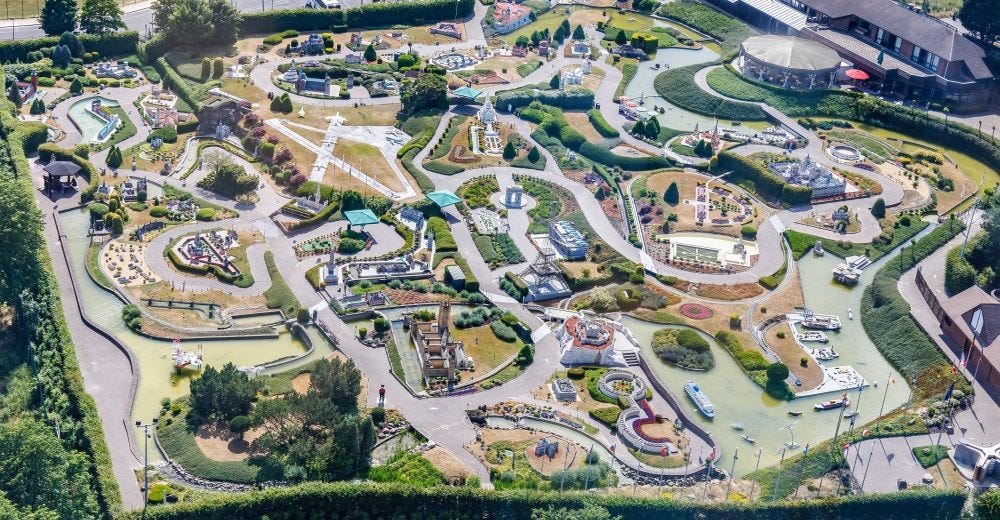
Mini-Europe is a quirky gem nestled in the outskirts of Brussels, just north of the Royal Greenhouses and the many magnolia trees of Parc de Laeken. It is billed as a way to “Explore the cities, buildings, history and innovations of the Old Continent,” and given the large number of children running around with pencils and worksheets, it is doubtless a staple of school field trips.
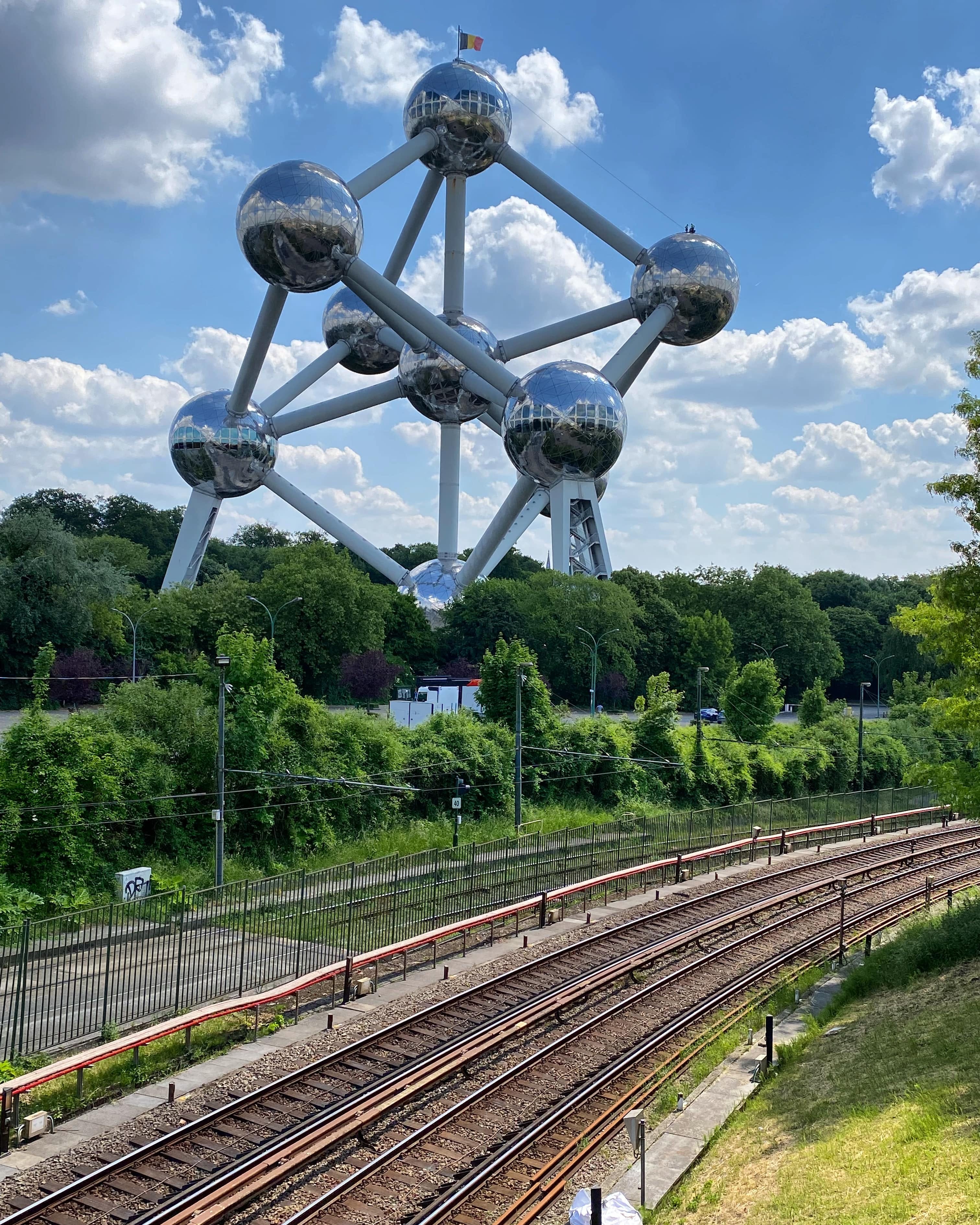
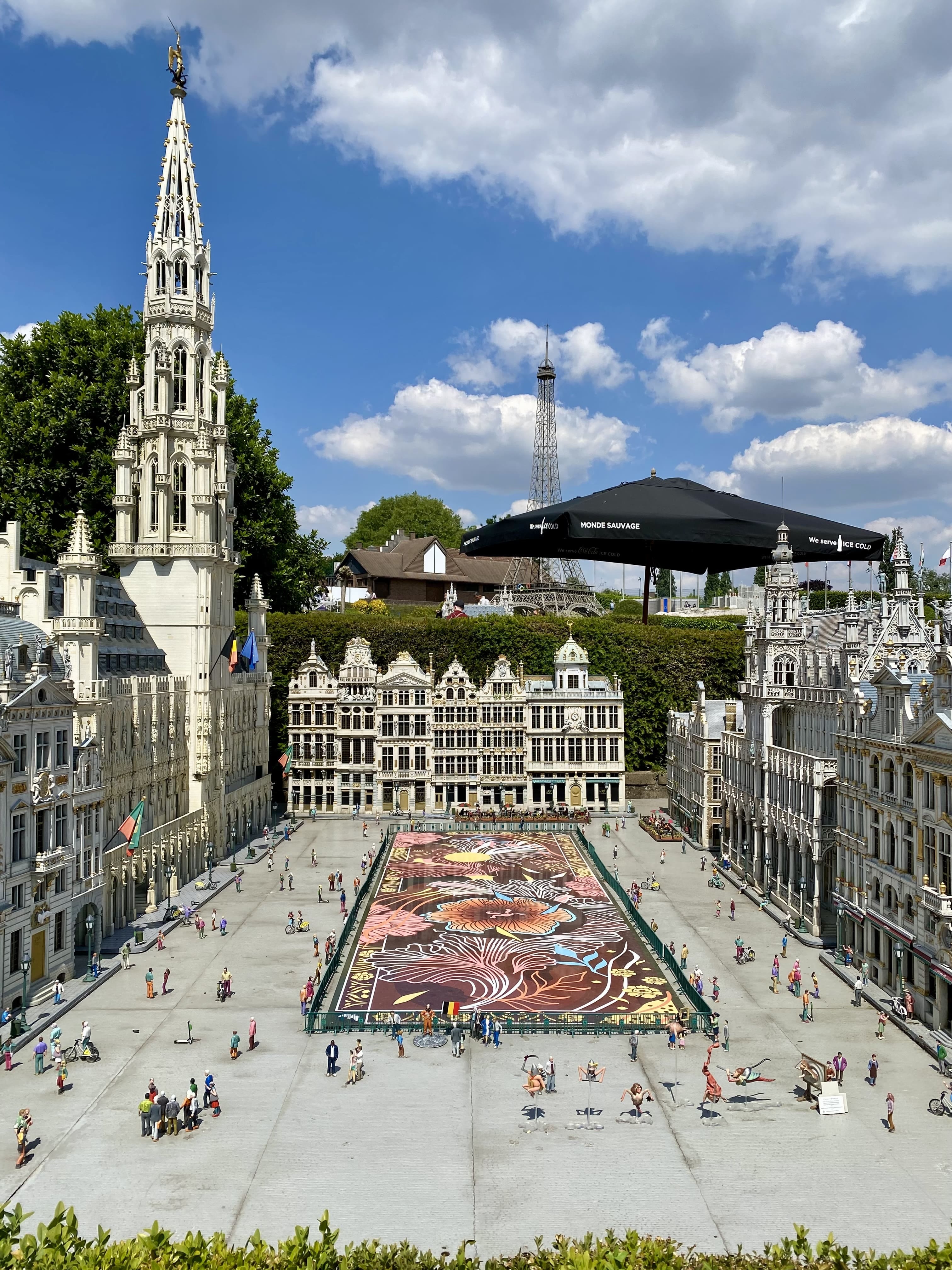
Mini-Europe’s over 350 buildings, 9,000 figurines, and 60 animations are crafted at a 1/25 scale, including the 236 statues sculpted for Belgium’s Leuven Town Hall; all except Mount Vesuvius, which is ever-erupting near the end of the park, given that it would have been 51 metres tall. The weather-proofed, large-scale models dot a landscape segmented by a lagoon system that supports all manner of insects, fish and birds. And the whole miniature park is lorded over by the Atomium, a massive stainless steel structure built as the main pavilion and symbol of the 1958 Brussels World’s Fair—and a really fun place to explore with its labyrinth of spherical rooms and escalators.
Mini-Europe, by the numbers:
2 years: The time required to build Chenonceau Castle, one of three monuments created by stone sawing. The final material for the other models is mostly polyester.
4 to 6 years: The time between paint jobs for these outdoor models. Gilding is carried out using gold leaf for greater durability.
1,800 kg: At 1/25 scale, the Eiffel Tower weighs this much and is 13 metres high.
4,000: The number of hand-painted spectators in the arena model of Plaza de Toros in Seville.
€75,000: The average cost of each model, with the Grand-Place in Brussels costing €400,000. The production budget for an animated sequence like the Vikings is around €25,000.
80,000: Nearly this many stones were stuck together by the modeller of Alden Biesen, a 16th-century castle in the small village of Rijkhoven, Belgium.
Though no longer part of the European Union, the UK has a large presence at Mini-Europe: everything from drilling platforms and solar vehicles to the birthplace of William Shakespeare. I learned that Westminster Palace has 3 km of corridors and its bell weighs 14 tons (for the dinosaur-minded, like me, that’s the same as two Tyrannosaurus Rexes). Also, by reading the guide entry for the stately Longleat House in Wiltshire, England—a region on my to-visit list that includes Stonehenge—I discovered that the seven domes on its roof are a reference to the days of the week and it has 365 windows for every day of the year, as well as a vast garden that has been converted into a safari park.
Elsewhere in the British Isles, I stumbled upon things I should have known but didn’t, like the reason why Ireland is linked with the clover leaf. I assumed it was because the ‘Emerald Isle’ is so green, but it’s actually because “In the 5th century, Saint-Patrick—a missionary and Christian bishop—used a clover leaf to teach the Irish people the doctrine of the Holy Trinity.”
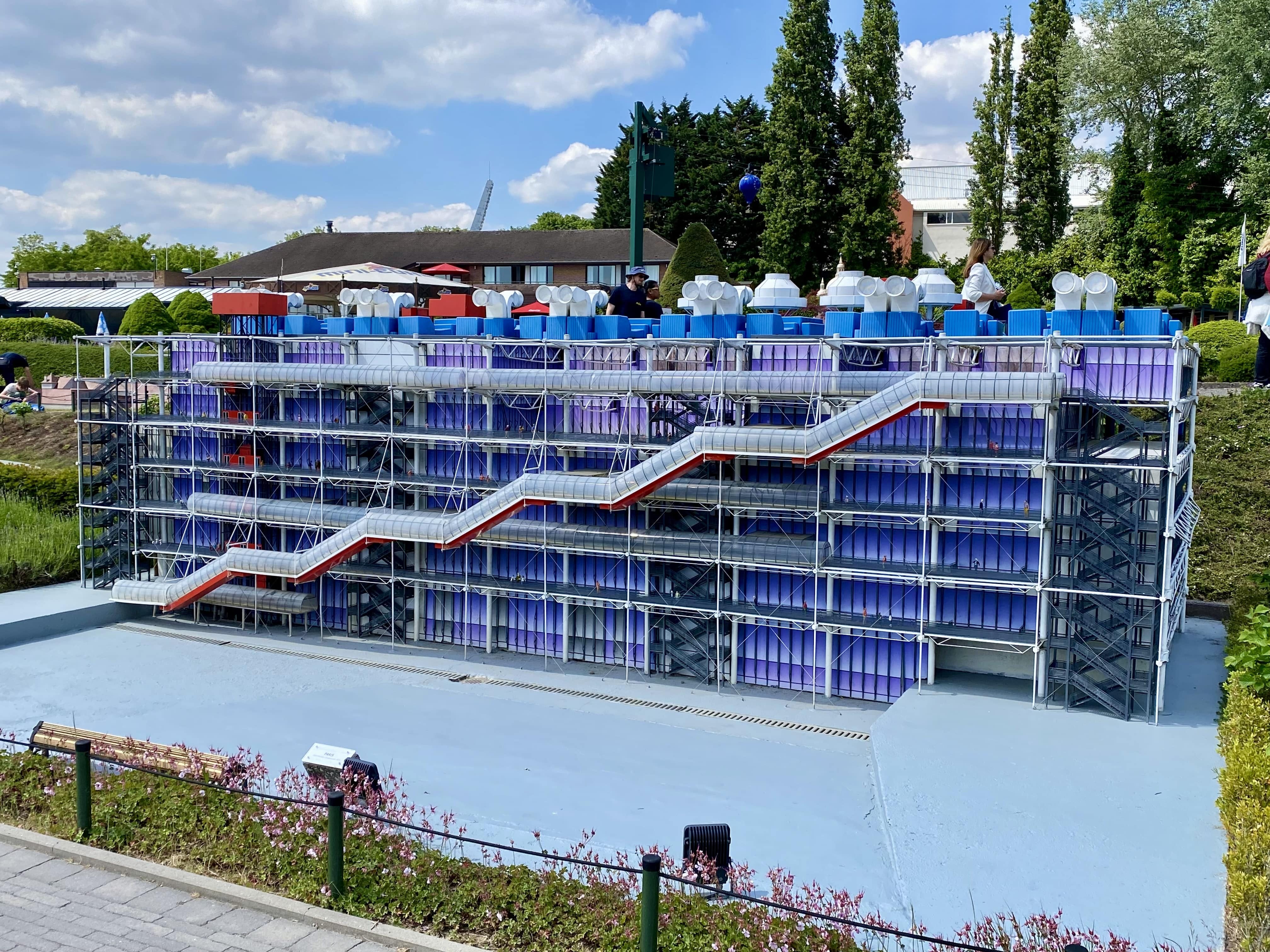
And further afield, I was reminded of fun European facts I had buried under more recent sediment, such as how every colour that makes up the Centre Pompidou in Paris represents part of the inner workings of the building: “red for circulation of people, blue for air-conditioning, green for water and yellow for electricity.”
In addition to all these scraps of trivia blowing around in my brain, without further adieu here are what I consider to be Mini-Europe’s 10 Most Unexpected Tidbits, with Italy and Finland muscling in with two slots each.
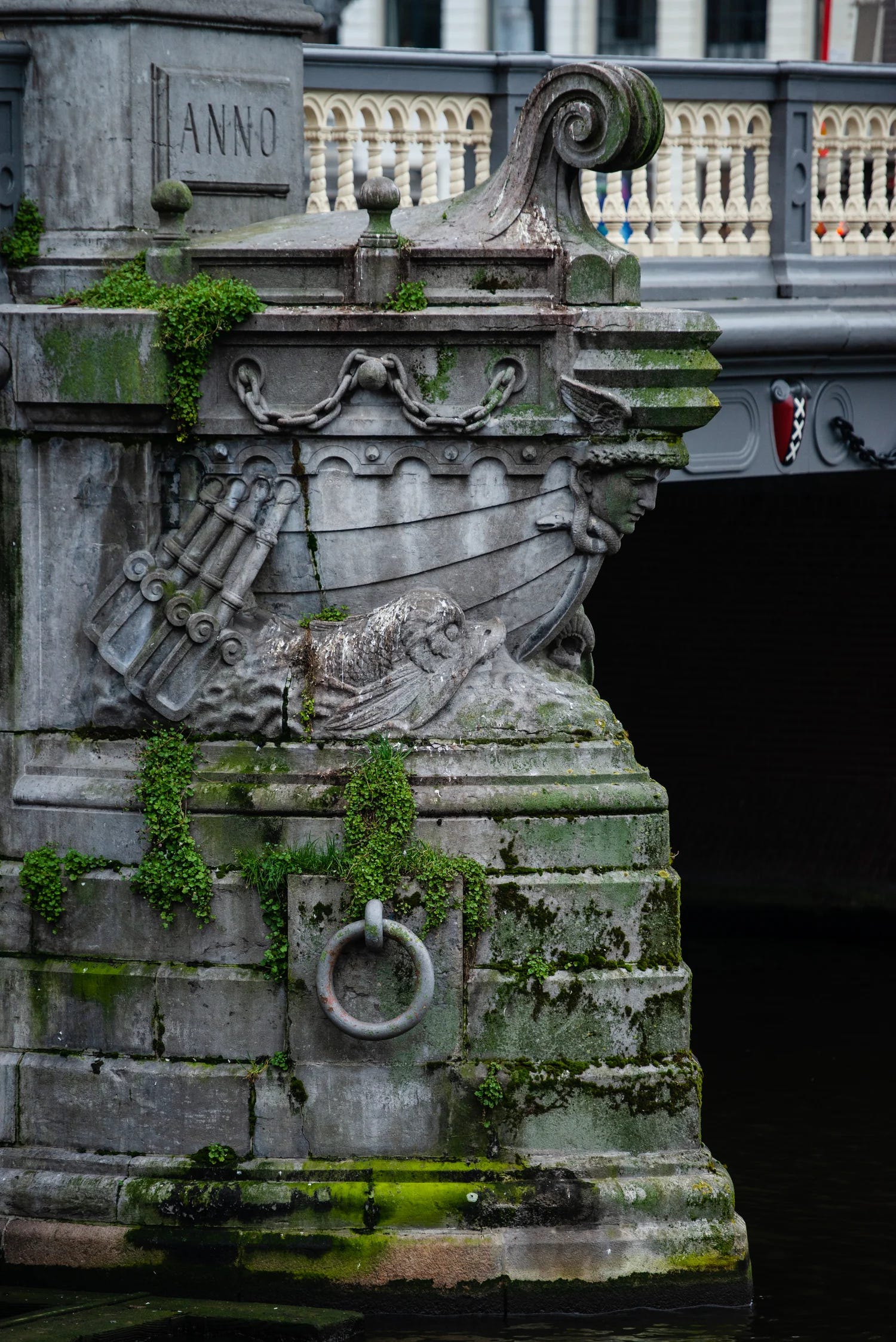
10. Amsterdam has 1,000 bridges, whereas Venice has ‘only’ 700
The Netherlands is known for its transport routes. Afterall, it has upwards of 35,000 km of cycle paths, with nearly the entire population owning its own bicycle. And the Town Hall in Maastricht was even constructed with a double staircase to allow its 17th-century joint rulers the Duke of Brabant and the Prince-Bishop of Liège to enter the building simultaneously so that neither appeared more important than the other.
But it’s in its bridges that the Netherlands—and Amsterdam specifically—really shines. A fact that has earned it the nickname “Venice of the North.”
Side note: There is a canal system in London dubbed Little Venice. A sign, perhaps, of the huge influence Italy—and the Renaissance—has had on Europe.
9. Germany has the highest number of museums: more than 6,500
The German National Tourist Board even puts that number closer to 6,800—everything from a Spy Museum to a Museum of Bread and Art.
8. Finland is one of a select few countries naturally gaining land
Finland gains approximately 10 km2 a year from the Baltic Sea. This is due to the rise in the Earth’s crust after the melting of the ice caps that covered much of Northern Europe 40,000 years ago.
Contrastingly, the Netherlands, with almost half its territory below sea level, faces dire risks from rising sea levels.
7. Italy’s mountainous landscape can be blamed for its fierce rivalries
With hard-to-cross mountains carving up the Italian topography, creating natural boundaries, independent towns and cities have been the country’s norm. And like Toronto and Montreal or Boston and New York today, rivalries flared and continue to flare between these close-yet-distant locales. Wars of words or weapons waged about everything from economics to football.
6. Mnajdra and other Maltese temples are thought to be the oldest stone temples in the world
The European Union’s smallest Member State, the Mediterranean island of Malta—its name meaning ‘honey’ in reference to its golden-coloured stone, with which its 400+ churches were built—is home to a megalithic temple complex. Mnajdra, along its southern coast, is one of a series of temples that pre-dates the Great Pyramids of Giza and Stonehenge in the UK by nearly 800 years.
The Mnajdra ruins are grouped into three sanctuaries, one of which faces east and acts like a solar observatory of sorts: on the spring and autumnal equinoxes, the sun shines through its nested chambers to illuminate an altar. According to the World Monuments Fund, “Though not much is known about the island’s Neolithic inhabitants, based on archaeological evidence it is thought that they were ancient mariners.”
5. Nearly a million euros are collected in Rome’s Trevi Fountain every year
Penny for your thoughts? How about a million euros?
Like most of us, I knew about the tradition of throwing a coin over your shoulder and into the Trevi Fountain as a vow to return there one day. What I hadn’t considered was just how much money those individual vows added up to. Thankfully, this money is passed on to charitable and cultural causes, such as food banks, soup kitchens and assistance for poor families in the Rome area.
Another monetarily related tidbit that nearly made this list has to do with the little limestone trulli houses with conical roofs in Alberobello, Italy. In the 18th century, when the tax collector came knocking, their homeowners used to quickly dismantle them, rebuilding them again once the collector had moved on.
4. Champagne bubbles were once thought to be the work of the devil
France, which is the largest country in Europe and the country with the most territories outside of Europe, is known for many delectable things. One of those is certainly champagne. Or, as the French called it until at least the 18th century, ‘devil’s wine.’
Why the sinister reputation? Wine prematurely bottled before the completion of the fermentation process led to bubbles, as well as intense pressure. This pressure would cause bottles to suddenly explode, shooting off corks and causing a domino effect in the cellars. Wine would be lost, as well as an eye or two as nearby monks were maimed and even killed.
3. We have an Ottoman attack to thank for the croissant
The croissant is a staple of French cuisine, but it turns out its origins are Viennese.
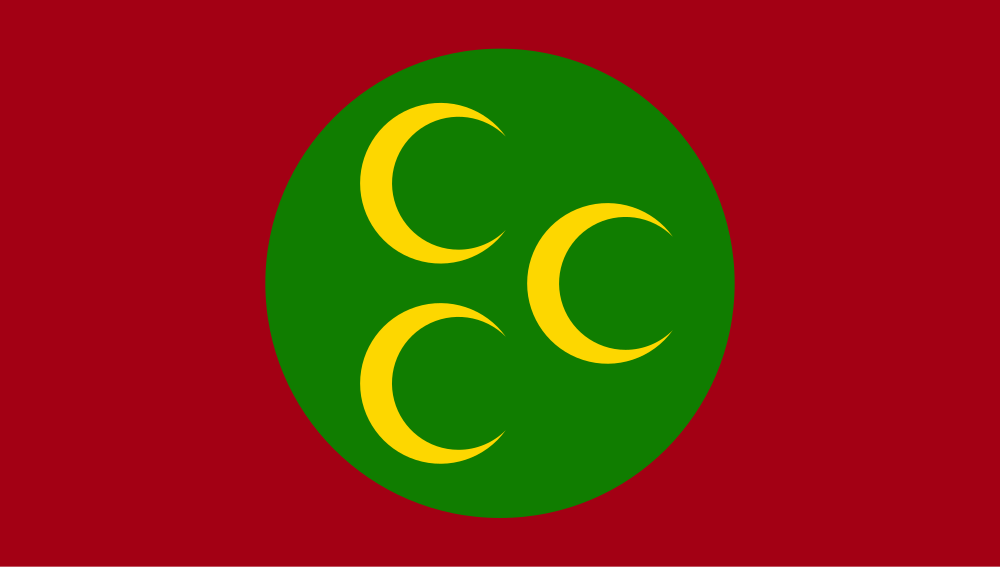
One fateful dawn in 1683, a brave baker sounded the alarm that the Ottomans were besieging Vienna. Due to this timely warning, the Habsburgs were able to beat back the attackers. In celebration, a pastry called a Hörnchen was designed in the crescent shape found on the Ottoman flag.
I guess you could say the Viennese ate the competition.
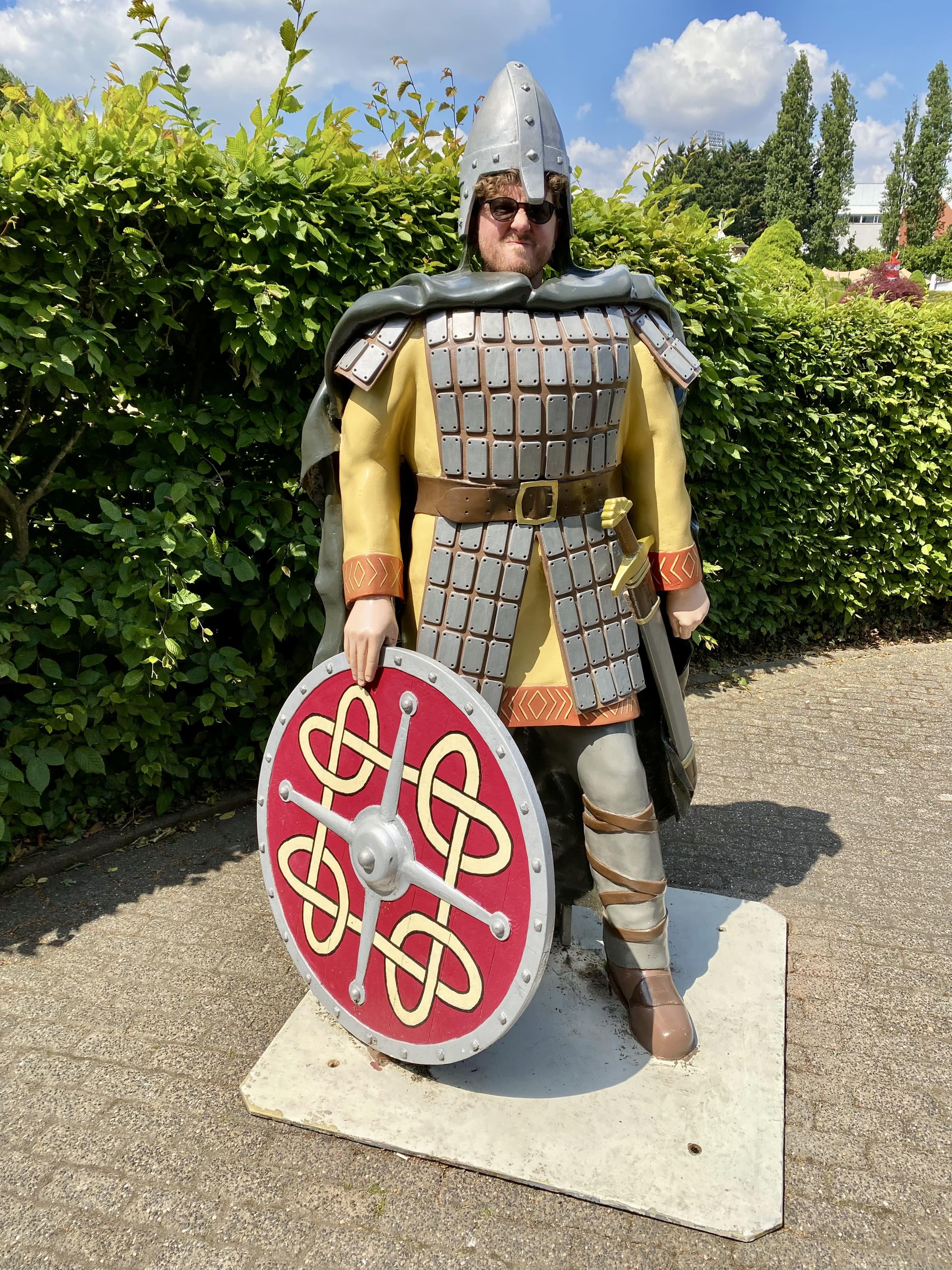
2. Vikings never wore horned helmets
Scandinavian Vikings were a bedrock of European civilisation, forcing populations to create strong social and political structures to defend themselves while also passing on a system of laws and justice that formed the basis of modern juries.
We don’t tend to think of Vikings as civilised but we do tend to think of them in dorky-scary helmets. Turns out that’s a myth. A vision of the past concocted in the 19th century by Scandinavian artists and in such works as Richard Wagner’s Norse operas, then perpetuated in pop culture ever since.
1. There are more saunas in Finland than there are cars
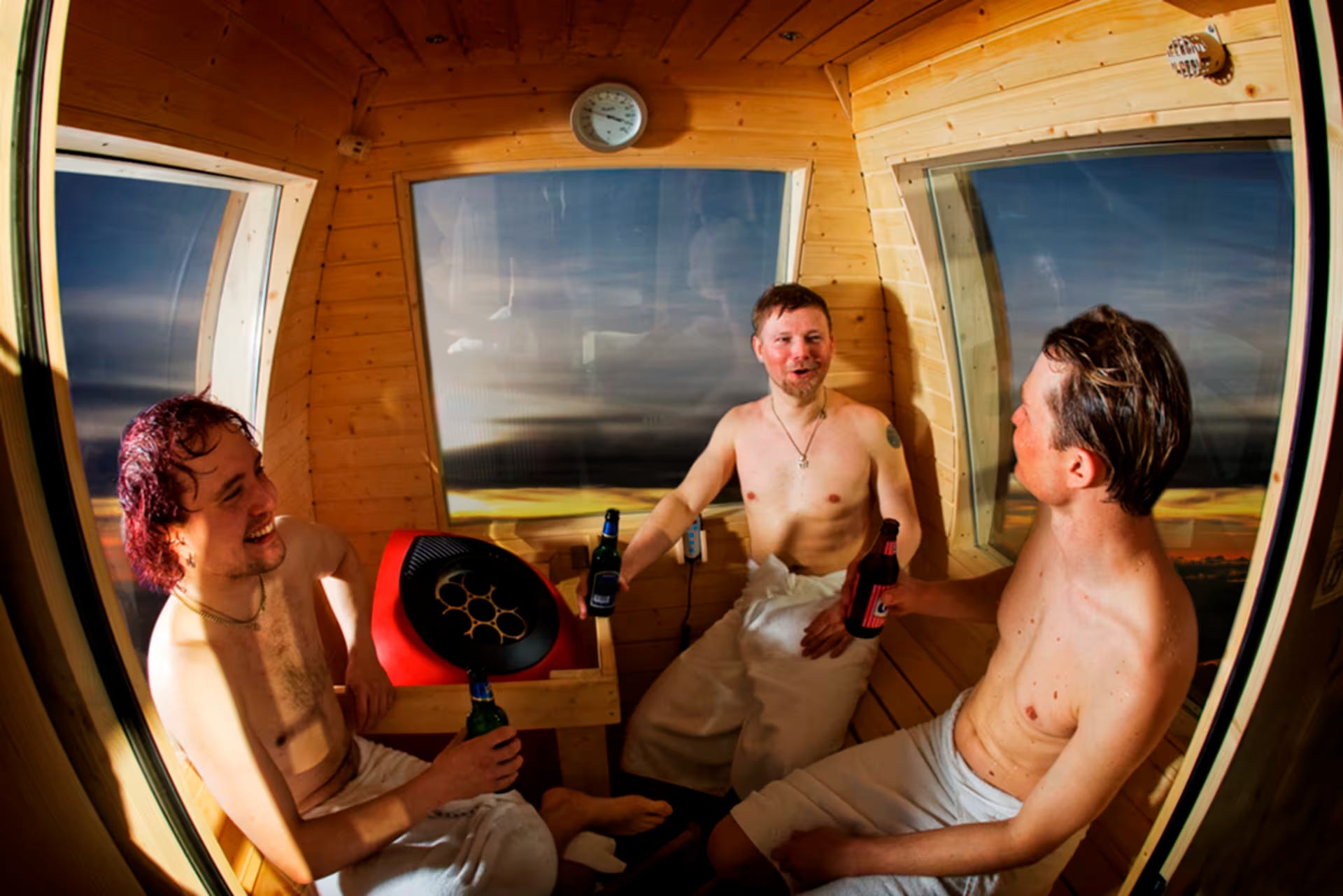
Approximately 3.3 million to be specific. Fitted in homes, rural cottages, public facilities and even offices and found everywhere from snow (ex. the Snow Sauna in Rovaniemi) to sky (ex. the SkySauna Helsinki on a Ferris Wheel; the Sauna Gondola in Ylläs).
Happy Eurotripping,
Mikey
That was so much fun. Every tidbit delicious!